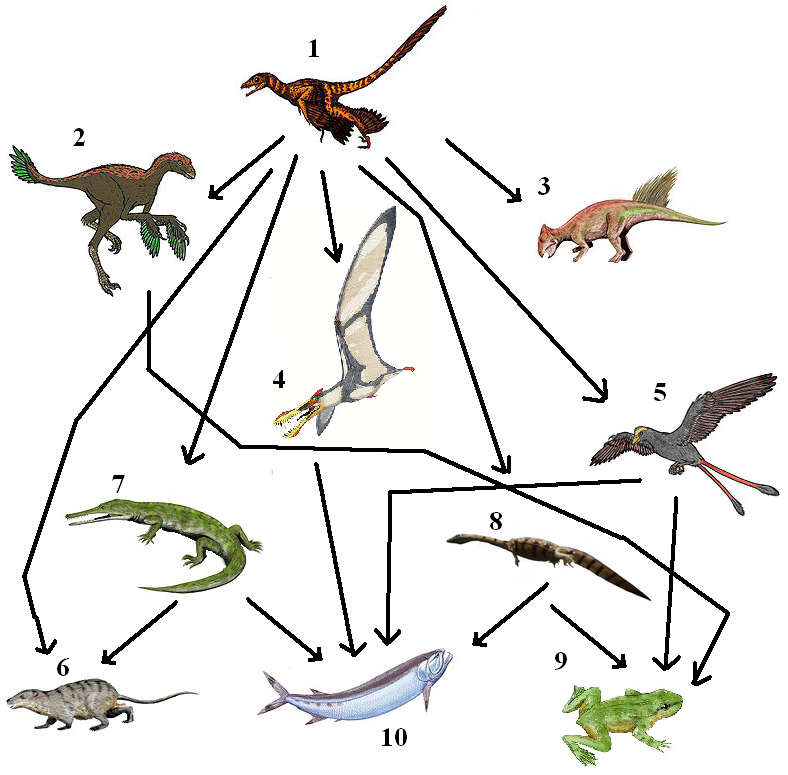
Food chain Ocean food Ocean food chain Biology Diagrams On the seafloor, benthic food webs operate under different constraints, shaped by the accumulation of organic material descending from the water column. Deep-sea ecosystems, in particular, depend on marine snow—detritus composed of decaying organisms, fecal matter, and organic particles—as a fundamental energy source.

Food webs are key to understanding how an ecosystem functions. The webs are just that: networks of complex feeding relationships, not just the linear food chain we may have learned about in a biology class. More, food webs illustrate the energy flow and predator/prey interactions within an ecosystem. Pelagic predators from deep sea food web

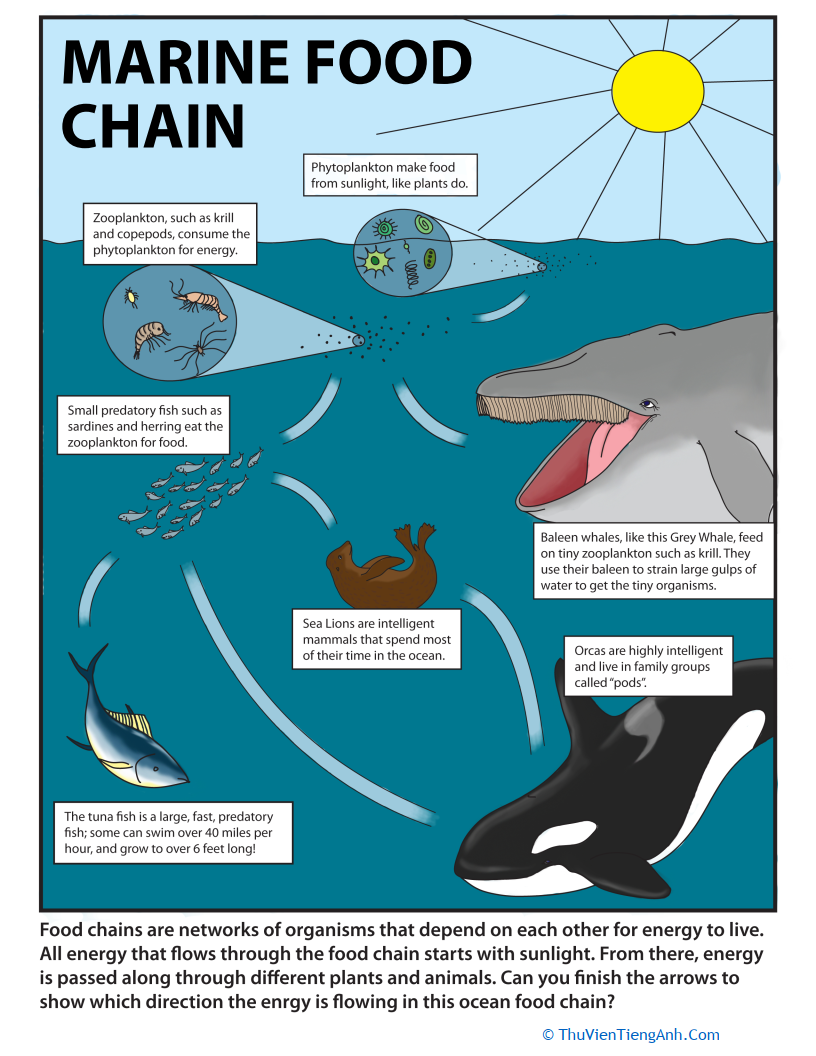
Ocean Ecosystem Pyramid: A Look into Top Biology Diagrams
At the deepest parts of the ocean, such as the Mariana Trench, the pressure can reach an astonishing 15,000 psi (pounds per square inch), which is over one thousand times greater than atmospheric pressure at sea level. These organic compounds serve as the foundation of the food chain in the deep ocean, sustaining a variety of unique This strongly suggests that surface-produced OM serves as a critical food source for trench organisms, primarily consisting of carrion (Wang et al., 2019). This revelation opens the door to the possibility of rapid vertical transport of anthropogenic pollutants through the food chain from the ocean surface to the hadal trenches.
The hadal zone, while covering just 1-2% of the ocean floor, accounts for the deepest 45% of the ocean's vertical depth. It is a realm of extreme conditions, where immense pressure, total darkness, limited food sources, and near-freezing temperatures create an environment that commonly considered inhabitable by only a few specialized organisms. The discovery also sheds light on the food chains in these incredibly deep zones, as this fish is most likely a predator in this environment and highlights that even at such incredible depths, life finds a way to thrive. One-celled organisms called monothalamea have been found in deep-sea trenches at depths of up to 35,000 ft (10.6 km
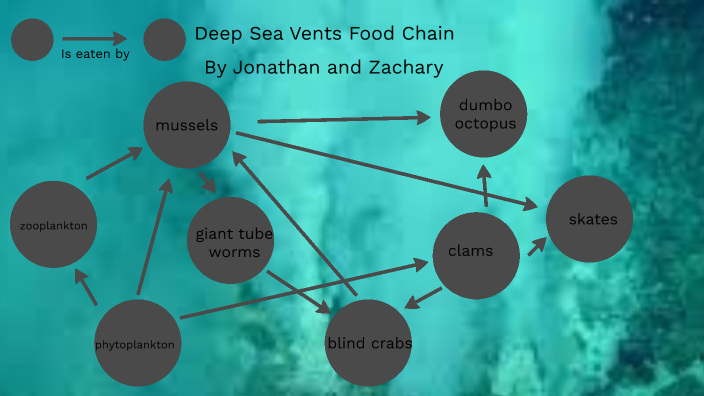
Deep Sea Food Webs Biology Diagrams
The carcasses of large pelagic vertebrates that sink to the seafloor represent a bounty of food to the deep-sea benthos, but natural food-falls have been rarely observed. also reported -, prompting discussion of the role that food-falls play in deep-sea food chains BR (1978) Scavenging amphipods from the floor of the Philippine Trench